
Innovation Hubs for Gene Therapies celebrate five years of impact

On 18 June, the Innovation Hubs for Gene Therapies (IHfGT) network gathered to celebrate the conclusion of five years of funding from the Medical Research Council (MRC), LifeArc, and the Biotechnology and Biological Sciences Research Council (BBSRC).
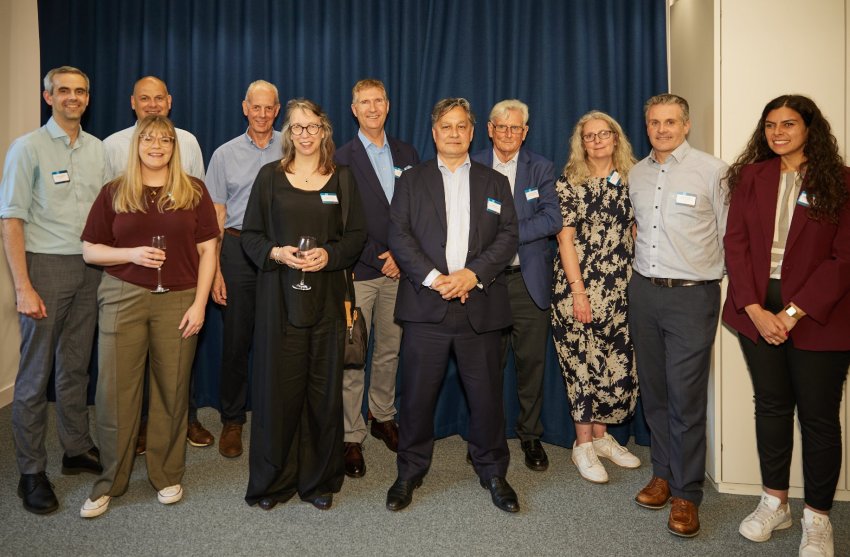
The reception brought together guests from across the network, including representatives from the three Innovation Hubs, the funders, the Coordinating Committee, and partners such as the Cell and Gene Therapy Catapult.
Closing a critical gap in UK gene therapy manufacturing
Awarded in 2021, the £18 million investment has supported the creation of three GMP viral vector manufacturing facilities dedicated to supporting the academically-led development of novel gene therapies. The three facilities are located at NHS Blood and Transplant in Bristol, the University of Sheffield, and King's College London (in partnership with University College London and the Royal Free London NHS Foundation Trust). Each facility brings complementary capabilities, including AAV and lentiviral vector production and plasmid manufacture. Together, they were established to close a critical UK gap in the affordable, timely manufacture of clinical-grade viral vectors for academic gene therapy development.
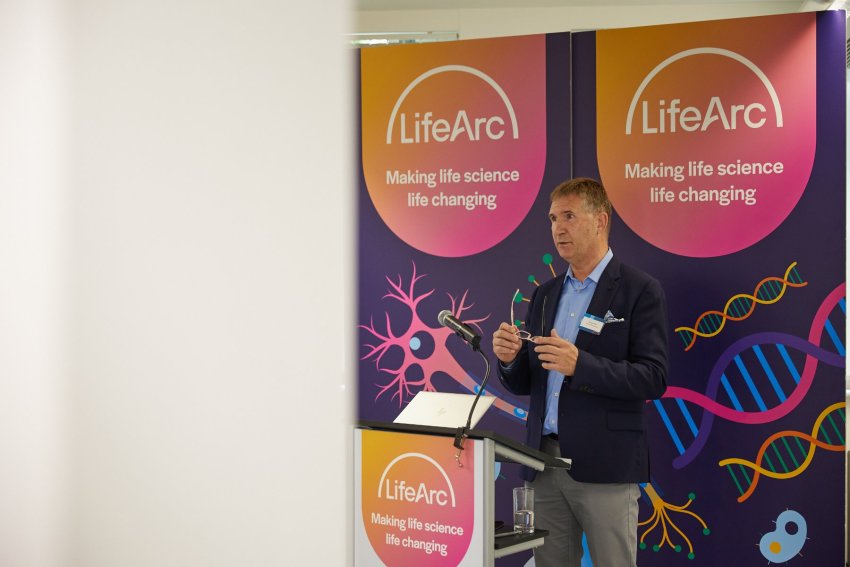
Opening the proceedings, Dr Sven Kili, Chair of the IHfGT Coordinating Committee, reflected on the scale of the Innovation Hubs’ achievement:
"Over the past five years we've gone from identifying a critical gap in researchers being able to source clinical-grade viral vectors, to establishing three fully operational GMP facilities. From an initial £18 million investment, the network has leveraged more than £37 million in additional funding and now supports over 130 FTE of highly skilled staff whose expertise will benefit the UK for years to come. This investment in people and capacity is a huge step towards changing patient’s lives in the UK and globally."
Beyond manufacturing capacity, the Coordinating Committee has awarded over £450,000 to the Hubs, supporting collaborative projects across the network, from staff exchanges and student bursaries to novel plasmid development. The Hubs have also engaged with more than 18,000 school pupils and members of the public through outreach events including the Cheltenham Science Festival.
Crucially, through the MRC, LifeArc and BBSRC funding, the network has developed scalable GMP platforms capable of manufacturing AAV, lentiviral and retroviral vectors, capability that is now supporting first-in-human trials of novel gene therapies developed by UK academics.
Why this matters for patients
Next to address guests, Dr Karen Skinner, Chief Operating Officer at LifeArc, placed the Innovation Hubs investment within LifeArc's wider strategy for tackling rare diseases:
"Around 7,000 rare diseases have been identified, affecting more than 300 million people worldwide, and 95% still have no approved treatment. Advanced therapies, including gene therapies, have the potential to be transformative for patients with rare conditions. The Innovation Hubs are helping turn that potential into a reality, giving researchers the manufacturing capability they need to take promising science through to patients."
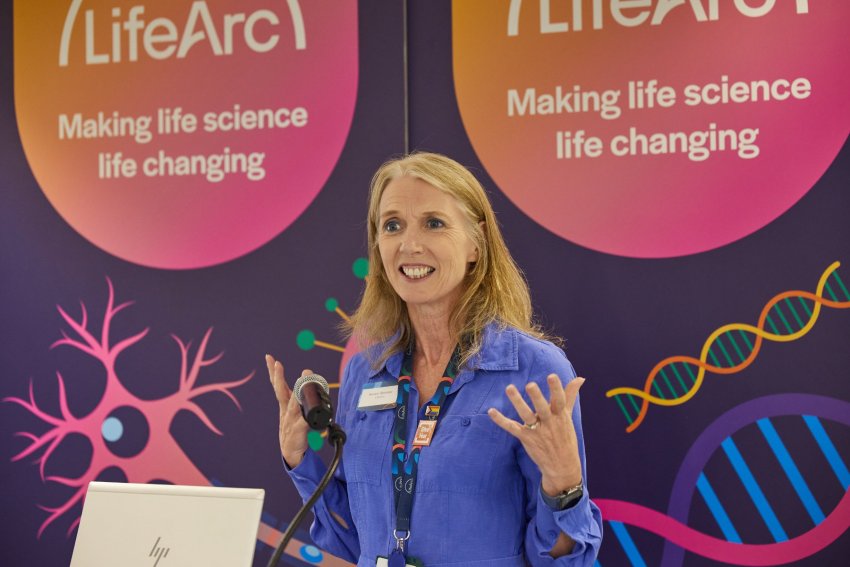
Karen also reflected on the collaborative approach to this initiative and highlighted that such partnerships were central to how LifeArc delivered impact. Bringing together LifeArc, MRC, BBSRC and the Innovation Hub host institutions has resulted in significantly greater achievements in a shorter period of time than any one organisation could alone.
She pointed to two examples of the Innovation Hubs model already in action: a LifeArc-funded project developing a gene therapy for a rare inborn error of immunity, with manufacturing taking place at the Bristol Hub, and an MRC and LifeArc co-funded clinical trial of a novel lentiviral gene therapy for rare epilepsy, with manufacturing at the London Hub.
A pipeline from discovery to patient benefit
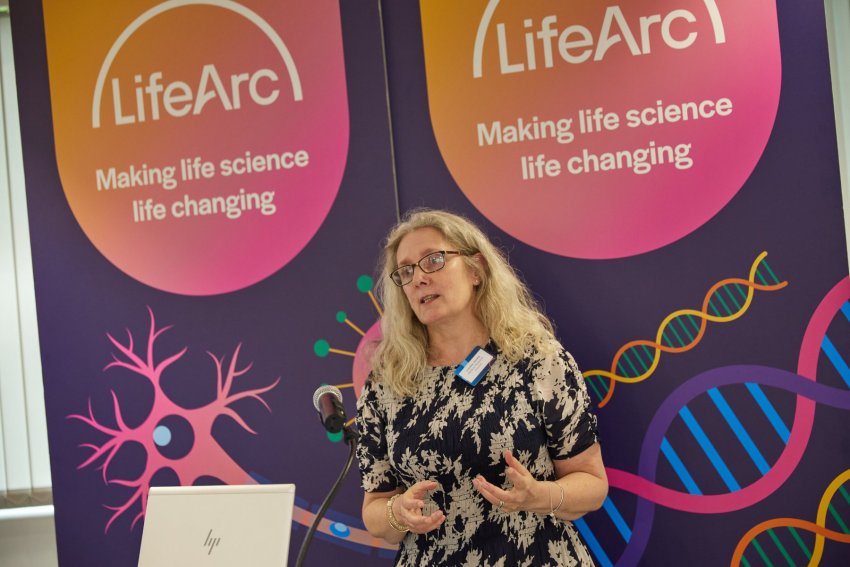
Closing the formal remarks, Dr Louise Jones, Executive Director of Investigator-Led Research at the MRC, set the Hubs' achievements in the context of MRC's wider strategy:
"MRC has provided long-standing investment in advanced therapies, including gene therapies, to help translate world-leading discovery research into benefits for patients. The Innovation Hubs contribute to the UK's advanced therapies ecosystem by strengthening manufacturing capability, regulatory expertise and translational infrastructure for gene therapies, helping researchers progress promising innovations towards clinical application."
Looking ahead
While celebrating five years of progress, all three speakers agreed that the work continued. Important milestones lie ahead for the network, including securing an MHRA licence for the Sheffield facility and the first GMP AAV vector manufactured at the Bristol Hub to be administered to patients.
As the UK's academic gene therapy pipeline continues to grow, the Innovation Hubs for Gene Therapies remain committed to strong collaboration across sites, strategic partnerships with industry, and the adoption of new manufacturing technologies, ensuring they remain a sustainable part of the UK's advanced therapies landscape for years to come.
Are you developing a gene therapy that needs GMP manufacturing support, or are you interested in exploring a partnership with one of the Innovation Hubs? Get in touch with our Business Development leads via the Contact Us page.